
SEO in Practice: optimize your pages to grow in search engines
Learn real techniques to improve your organic ranking: semantic structure, relevant content, performance, accessibility, and modern strategies that strengthen your presence in search engines consistently and sustainably.
How SEO Works in Practice
SEO is not just about choosing the right keywords — it is, in fact, a combination of factors that work together to help search engines understand the quality, purpose, and relevance of your page. Elements such as user experience, semantics, accessibility, speed, content architecture, and external authority form the foundation of modern SEO. The clearer and more complete the experience you offer to visitors, the better your site performs in search results.
In practical terms, search engines evaluate how the page behaves, how it is structured, how the content matches the user’s intent, and whether navigation is intuitive. They look at everything from heading organization to how internal links connect, as well as readability, scanability, and the overall clarity of information.
Beyond that, the algorithm tries to predict whether the content truly solves the user’s problem. To do this, it observes signals such as engagement, time on page, return visits, readability, thematic consistency, and even the level of authority demonstrated by other sites that reference your content.
When the structure is semantic, logical, and well-organized, the search engine gains a much clearer understanding of the purpose of each part of the page: what is a title, what is a section, what constitutes the main content, which elements support the message, and how everything connects within the main topic. This makes ranking easier and increases the relevance of your page for related searches.
In short: SEO works when your site genuinely helps the user. The clearer, more accessible, organized, fast, and useful your content is, the more search engines reward your page. SEO is, above all, the alignment between user intent and the value you deliver.
Semantics and Structure
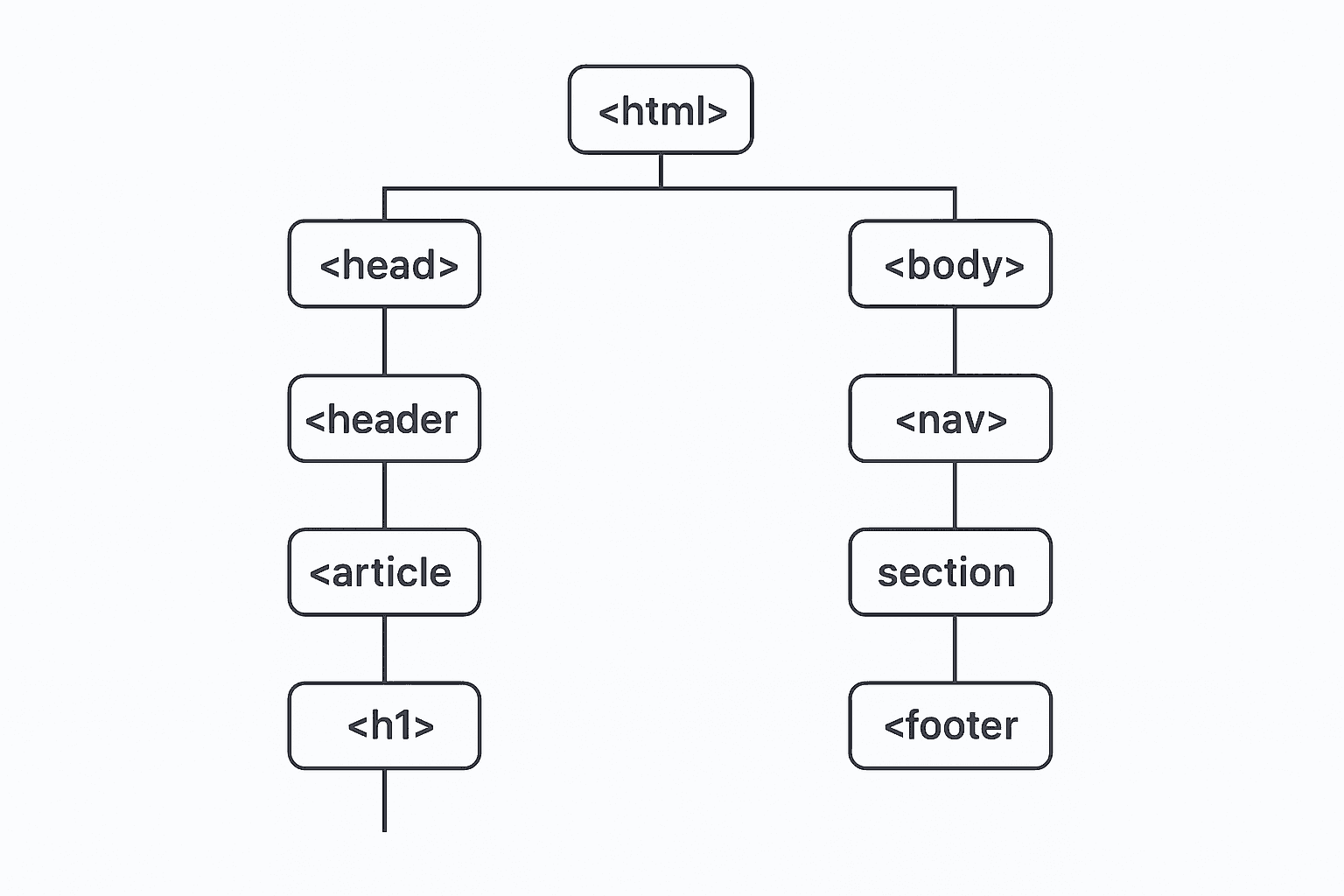
The foundation of high-quality HTML lies in its structure. A well-organized page not only helps search engines understand the content more clearly but also improves readability, accessibility, and overall user experience. When every element is placed correctly and used with the proper purpose, the entire ecosystem of the page becomes more predictable, functional, and clear.
Semantics adds a layer of meaning that search engines can interpret to understand context, importance, and the relationship between different parts of the content. It's like providing a mental map of what is essential, complementary, navigational, or informational — and this directly reflects in better SEO performance, improved scan-ability, and greater inclusion.
- Use only one
<h1>per page.
It represents the main theme and serves as a reference point for search engines and screen readers. Multipleh1elements can harm the hierarchy and confuse the algorithm. - Keep a clear hierarchy of headings (
h2,h3, etc.).
This creates a logical structure of sections and subsections, allowing search engines to understand the order of importance and the narrative flow of the content. - Use appropriate semantic elements.
Tags such as<article>,<section>,<nav>,<header>, and<footer>help organize content blocks and make the experience clearer for any assistive technology — while also improving algorithm interpretation. - Avoid huge blocks of text.
Very long paragraphs harm readability and make scanning more difficult. Break content into smaller, objective, and visually lighter pieces. - Give context with descriptions, titles, and grouping.
Good naming and good division make understanding easier for both humans and search engines, reinforcing the intention of each block. - Maintain consistency in page structure.
Repeating patterns of headings, sections, and information order across different pages improves predictability and creates a more cohesive experience.
When HTML is semantic, navigation becomes more natural, reading more fluid, and search engines gain a clearer view of the content architecture. This strengthens ranking and significantly improves accessibility.
If you’re taking your first steps and want to learn in a practical way how to structure pages with HTML and CSS—building clear, organized, and scalable layouts—there’s a course that focuses exactly on these essential foundations. It teaches, step by step, how to turn basic concepts into real, well-structured web pages.Check out the “From Zero to HTML & CSS for Website Creation” course.
Content Aligned With Search Intent
Every search begins with a purpose: someone wants to understand something, solve a problem, compare options, buy a product, or simply confirm a piece of information. When your content matches exactly what the user expects — and goes beyond the basics — it becomes extremely valuable. This increases dwell time, reduces bounce rate, and sends strong positive signals to search engines that your page truly delivers what it promises.
Creating content aligned with search intent is not just about answering questions; it's about anticipating what the user wants to feel, know, validate, or decide. A page that delivers clarity, structure, and depth builds instant trust and is rewarded by algorithms that prioritize real relevance.
- Identify real questions users ask.
Research related terms, Google autocomplete, common forum discussions, video comments, and social media posts. The more you understand the user's natural language, the easier it becomes to create content that speaks directly to them — in the right tone and level of detail. - Provide clear answers right at the beginning.
The opening lines should immediately show the user they're in the right place. Summarize the main answer quickly, without unnecessary fluff, and then expand further. This improves engagement and increases the chances of earning rich snippets, such as Google’s well-known featured snippet. - Go deeper with examples, comparisons, lists, and practical guides.
After answering the core question, expand with helpful details: steps, demonstrations, analogies, real cases, alternatives, and best practices. Rich content reinforces authority, improves understanding, and keeps the visitor on the page longer — another positive signal for search engines.
When you respect user intent, provide clarity, and deliver real value, your content becomes naturally more competitive and tends to rise in the rankings — even in highly competitive niches. This is one of the strongest foundations of modern SEO.
Technical Optimization
Technical optimization is the foundation that supports the entire SEO strategy. Even with high-quality, highly relevant content, technical issues can compromise user experience, hinder crawler understanding, and ultimately harm your rankings. It is the invisible side of SEO — but absolutely essential.
When a website is fast, stable, well-structured, and properly configured, it creates the ideal environment for both users and algorithms to understand, navigate, and value the content. Slow, heavy, or disorganized pages suffer natural penalties because they degrade usability, increase loading time, and generate frustration.
- Use metadata correctly (title, description, canonical, and OG tags).
Well-configured tags help search engines interpret the page’s context, prevent duplicate content issues, improve social media previews, and increase CTR on search results. Small details like these make a significant impact. - Optimize images with
next/image.
Next.js’s native image component applies compression, lazy loading, modern formats like WebP, and automatic size adjustments. This drastically reduces total page weight and improves LCP (Largest Contentful Paint), one of the most important Core Web Vitals metrics. - Reduce unnecessary CSS and JS.
Dead code, heavy libraries, unused styles, and redundant scripts increase loading time and harm performance. Use tree-shaking, dynamic imports, style cleanup, and lightweight dependencies whenever possible. - Avoid CLS and layout shifting.
Unexpected layout movement frustrates users and worsens CLS (Cumulative Layout Shift). Always define width and height for images, reserve space for ads, and optimize font loading to prevent visual jumps across the page. - Implement caching and server optimizations.
CDNs, page caching, GZIP/Brotli compression, and optimized headers help deliver content faster while reducing server load. This boosts both SEO and overall performance. - Ensure clean and accessible HTML.
Accessibility and SEO go hand in hand. A well-structured, semantic, and easy-to-navigate HTML improves crawler understanding and supports assistive technologies.
When technical work is well executed, the website gains speed, stability, and clarity. This creates the perfect foundation for your content to shine and for search engines to recognize the page as a reliable, efficient, high-quality experience — worthy of the best ranking positions.